Where Sports Analytics Gains Its Accuracy
Sports analytics isn’t just about numbers or dashboards.
It’s about understanding the game at a level where machines and humans interpret performance the same way.
Today, almost every professional sport relies on video. Football matches, basketball games, tennis rallies, and padel exchanges are recorded in high resolution, producing massive volumes of visual data. But raw footage alone does not deliver insights.
This is where AI sports annotation becomes critical.
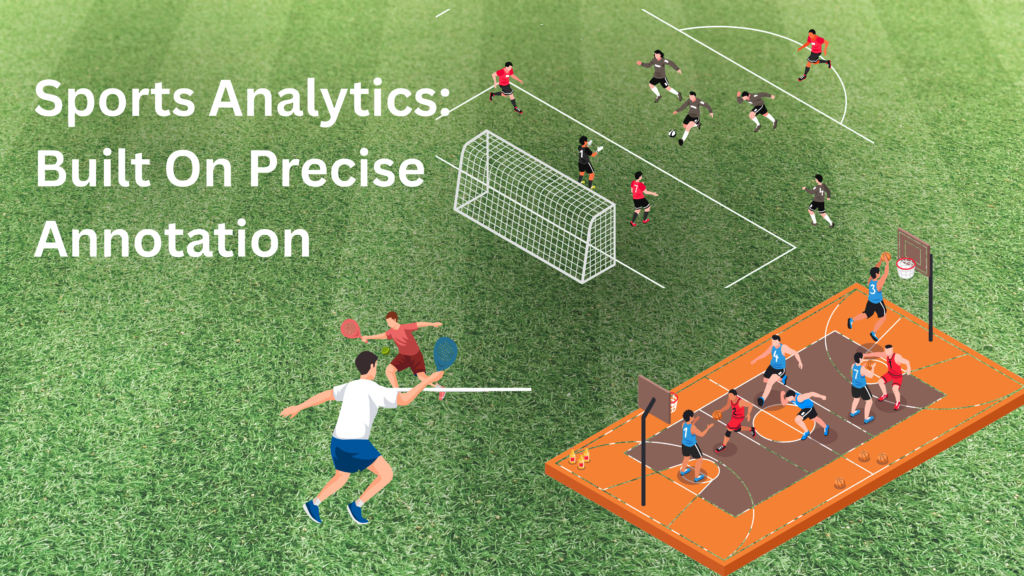
Through accurate AI data annotation, sports video is transformed into structured, machine-readable intelligence. From spatial awareness to player identity and action understanding, annotation is the foundation that enables modern sports analytics systems to work reliably.
Understanding the Playing Field: Court Annotation
Before analyzing player performance or ball movement, an AI system must understand the environment where the game takes place.
Court Segmentation and Image Segmentation
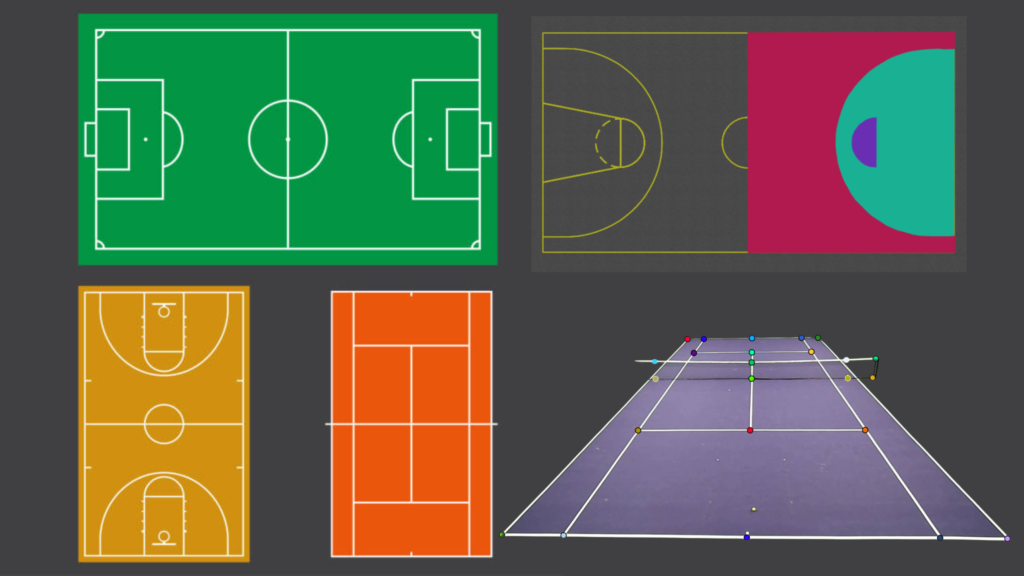
Court annotation often begins with image segmentation, where the playing area is divided into meaningful regions based on the rules of the sport.
In basketball, segmentation helps identify:
- Free-throw zones
- Two-point regions
- Three-point shooting areas
This segmentation allows analytics systems to classify shots, evaluate scoring efficiency, and compare player performance across court zones.
In racket sports like tennis and padel, segmentation helps distinguish in-play areas, service boxes, and out-of-bounds regions. Without accurate segmentation, spatial analysis quickly becomes unreliable.
Keypoint and Polygon Annotation for Court Structure
Alongside segmentation, courts require polygon annotation and keypoint annotation for sports to define structural geometry.
Keypoints are used to mark:
- Line intersections
- Corners
- Center marks
- Net positions
These annotations help normalize different camera angles, correct perspective distortion, and map player and ball positions accurately onto the court. This combination of segmentation, polygon annotation, and keypoints gives AI a precise spatial reference system.
Identifying Players and Teams: Player Annotation
Once the court is understood, analytics depends on identifying who is playing and for which team.
Bounding Box Annotation for Player Detection
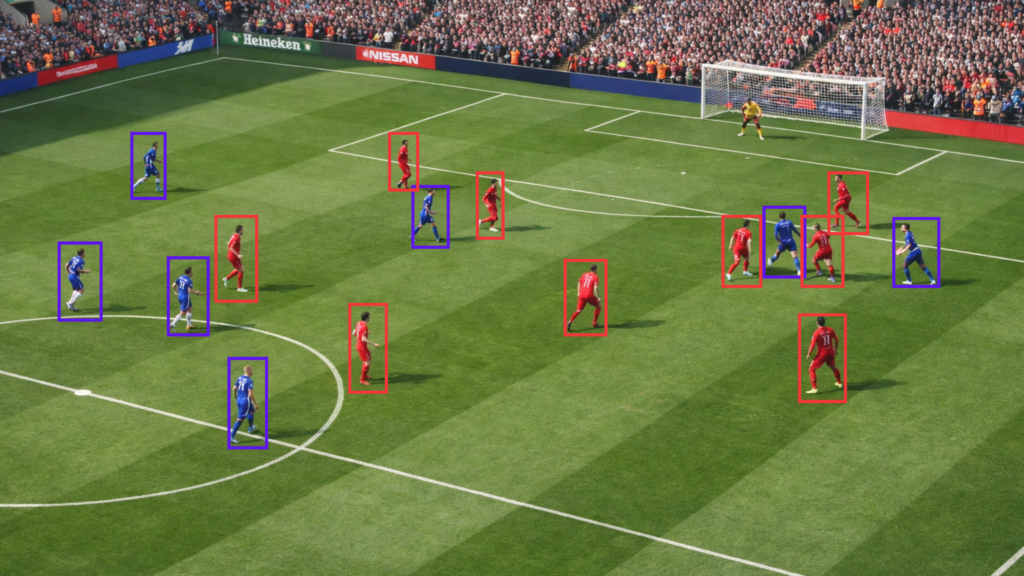
Bounding box annotation is used to detect players in each frame of the video. This allows systems to:
- Track player movement over time
- Measure distance covered and speed
- Build positional heatmaps
Bounding boxes form the base of sports video annotation pipelines and are essential for tracking performance at an individual level.
Team Classification and Player Attributes
Beyond detection, players are annotated with additional attributes such as:
- Team classification
- Jersey numbers
- Visual identifiers
Annotating jersey numbers and team labels ensures that every action, movement, or event is attributed correctly. Without this level of detail, analytics can identify motion, but not accountability.
This is where high-quality image annotation services and domain expertise become critical for accuracy.
Ball Detection and Ball Tracking: Preserving the Game Narrative
In almost every sport, the ball carries the story.
Lose the ball, and you lose the plot.
Ball Detection and Frame-by-Frame Tracking
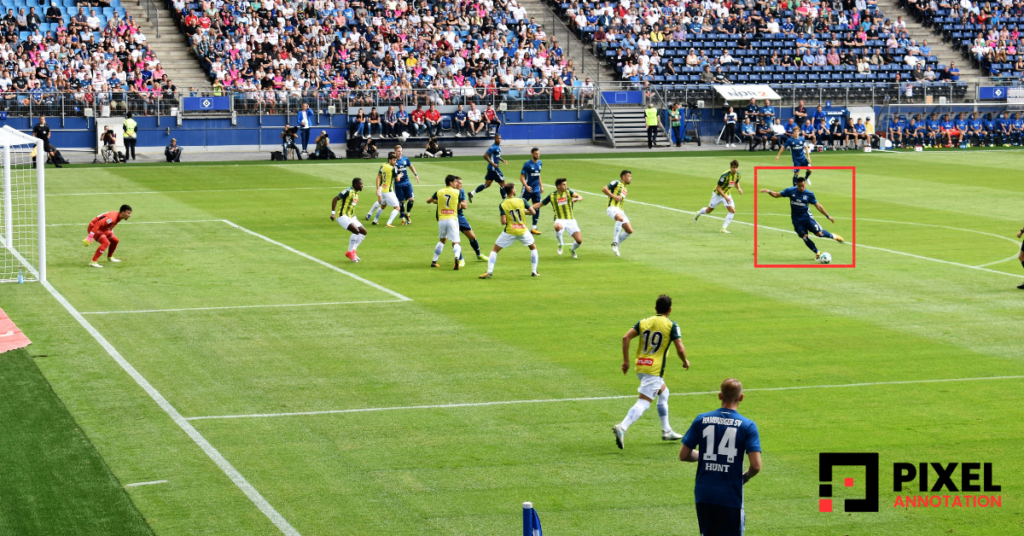
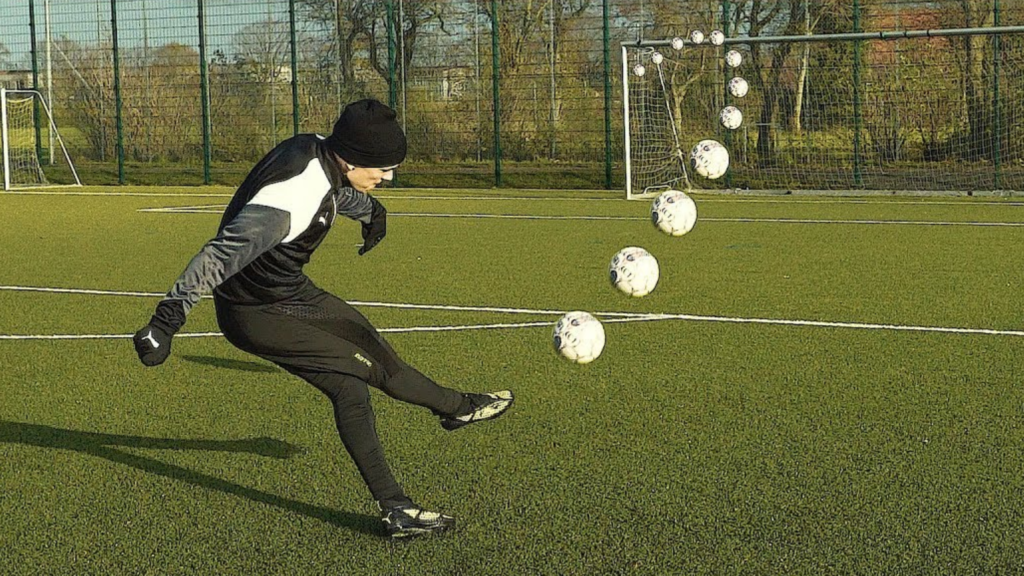
The ball is annotated using bounding box annotation, but unlike players, it must be labeled in every single frame where it appears.
Why?
Because ball movement defines:
- Pass sequences
- Shot attempts
- Possession changes
- Game tempo
Consistent ball tracking across the entire match ensures continuity. Even a short gap in ball visibility can break downstream analytics.
This is one of the most demanding parts of AI data annotation, but also one of the most valuable.
Action Annotation: Understanding the Game, Not Just Movement
Movement alone does not explain a game. Analytics becomes valuable only when AI understands what action is happening and why.
Game-Aware Action Annotation
Action annotation involves tagging every interaction where a player touches or controls the ball, based on the rules of the sport.
This includes:
- Passes, tackles, and shots in football
- Dribbles, rebounds, and blocks in basketball
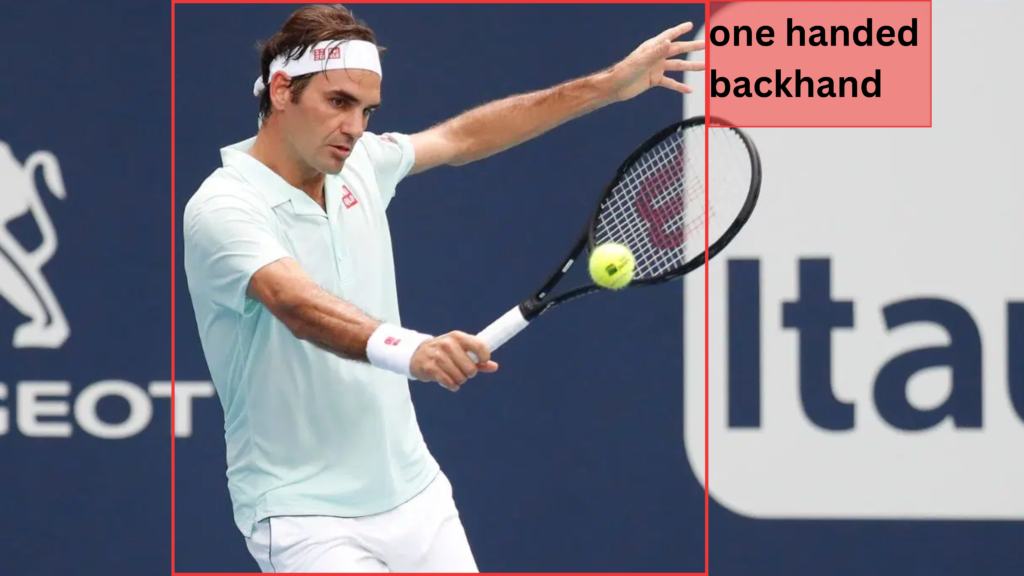
- Serves, volleys, smashes, and rallies in tennis and padel
These annotations are performed using both image annotation for frame-level precision and video annotation service workflows for temporal understanding.
Action annotation requires deep game knowledge. A misinterpreted action or incorrect timing can change the entire meaning of a play.
Posture and Pose Analysis: Keypoint Annotation for Performance
Advanced sports analytics goes beyond events and outcomes. It focuses on how actions are performed.
Keypoint Annotation for Sports Biomechanics
Keypoint annotation for sports involves labeling joints such as:
- Shoulders
- Elbows
- Hips
- Knees
- Ankles
This posture data helps analyze:
- Player balance and form
- Shot and serve mechanics
- Movement efficiency
- Injury risk indicators
Pose-based insights connect analytics with biomechanics, enabling performance improvement rather than just performance reporting.

Why Annotation Quality Defines Analytics Quality
- Court segmentation.
- Player detection and attributes.
- Ball tracking.
- Action understanding.
- Posture analysis.
Each layer depends on accurate annotation. Even the most advanced AI models cannot compensate for inconsistent or low-quality labels.
High-quality AI sports annotation is not just a preprocessing step.
It is the foundation of trustworthy sports analytics.
Every insight in sports analytics is decided long before a model runs or a metric is generated.
It’s decided at the pixel.
At that level, there’s no room for assumptions. A line is either where it should be. A player is either correctly identified. A ball is either tracked or lost. An action either happens or it doesn’t.
This is why annotation matters so deeply.
At Pixel Annotation, we believe that when the smallest details are handled with precision, everything built on top becomes trustworthy. Because AI doesn’t understand highlights or scorelines — it understands what it is shown, pixel by pixel, frame by frame.
Get that right, and sports analytics stops being an approximation of the game.
It becomes a true reflection of it.
And that’s where real insight begins.